St. Mary the Protectress Syriac Orthodox Community is located in Plymouth, Indiana. We are a monastic community and intentional Orthodox Christian community. We believe that you can pray to end hunger, but it is not a true prayer unless you also feed those who are hungry. We seek to live the example of Christ and serve all our neighbors. We are a multi-cultural and multi-ethnic worshiping community. Services are in English.
I recently took my five year old son on a day trip to a celebrated local observatory. Before we left, I showed an aerial photograph of the facility and its seven telescopes to his two year old sister. She pondered it for a moment, and then said, "We've been to that church!"
After I related the above anecdote to a friend, he quipped, "You Orthodox and your domes!"
His point was more insightful than he realized.
Light takes time to get to our eyes. When we scientists peer up into the night sky with sensitive equipment, we are looking backwards in time. The farther away the object of our focus, the farther back in time we are observing. The intent is to create ever-clearer images of objects farther and farther away. By doing so, we get ever closer to witnessing the first moments of the existence of the universe, to answering many questions about origins and mechanics, and to articulating new questions from occasional mysterious and unexpected data.
As it turns out, a dome is a common and convenient housing for the sorts of equipment that perform these observations.
The Pantokrator of the Cathedral of the Ascension, Oakland, CA
The Dome of Eternity
Traditional Orthodox architecture follows a coincidentally similar pattern. When we enter a typical Orthodox church, our gaze is drawn up toward a depiction common in Orthodox architecture. At the apex of the dome, we see the image of the Pantokrator, literally "the all-creating," or the One Who Created All. In a sense, this image could be seen as a depiction of a particular instant, that moment just after creation when the Creator decreed that Creation was "good," and offered it the sign His blessing.
But there is a deeper meaning to this image. Icons are never intended to be depictions of an instant, like photographs are. They are timeless. We are seeing a depiction not of the appearance, but of the character and intent of this Creator, and of the love that He offers. We are, in a mystical sense, looking beyond the instant of creation, past it, before it, to see the character of the Divine.
Is it possible, I wonder, that the first modern astronomers were inspired by what they pondered in worship, and desired to perceive with their eyes what they could vaguely begin to comprehend in their minds and hearts--the immensity of Creation? Actually, it is quite likely that there is a relationship between the two. They might possibly be inseparable. Without religion, would our scientific hunger be as strong as it is? For me, I say "no."
When our eyes are lifted up in Orthodox worship, we are doing what our eyes can never do in an observatory. We are looking before the before. We are peering past time.
We find a window into an incomprehensible eternity.
Epilogue
The docents of the observatory offer a short lecture every hour on the history of the oldest telescope in the facility. I found it quite fascinating.
My five year old's attention span was not quite so well-developed. After a few moments, he whispered that he wanted to leave.
By Fr. Steven C. Salaris, M.Div., Ph.D Presbyter All Saints of North America Orthodox Christian Church St.
One of the most difficult and sensitive areas that our clergy must deal with when non-Orthodox attend the Divine Liturgy is the "closed chalice." This refers to the teaching and practice of the Orthodox Church worldwide that only Orthodox Christians may partake of the Eucharist (or any sacrament for that matter) at our worship services. It is a simple concept, but one that seems to cause a lot of strife. There are two basic reasons for this: 1) Visitors from Protestant denominations are often used to open chalices where anyone is allowed to come to Communion. This author has observed a Protestant chapel service where the pastor stated that Jesus gave his Body and Blood not to a denomination, but to his disciples. Thus, anyone who felt called to the chalice was welcomed. You could be a Mormon, Catholic, Protestant, etc. and still come to communion at this Protestant chapel. 2) The Roman Catholic Church (Latins, Melkites, and Maronites) teaches that in situation where no Roman Catholic Church is present (unheard of in this country) and/or in cases of extreme and dire emergency where no Roman Catholic priest is available (again, not likely in this country) one can seek out the Orthodox sacraments if they feel it is absolutely necessary. This has led to the misconception amongst the Roman Catholics that one can commune from the Orthodox chalice anytime they visit an Orthodox Christian Church. Let’s quickly remind ourselves why these examples are incorrect and then elaborate a unique approach to explaining our closed chalice to the non-Orthodox.
Photo: http://orthophoto.ru
Eucharistic communion is an act of theological and ecclesiological union. Many bishops and priests that have written on this subject and the various authors all say the same thing: Eucharistic communion is not the path to, but the fruit of, of the Orthodox Church’s ecumenical work. For two church bodies to commune together means that we can look at each other and say, in all aspects, "We are one." However, in today’s world, churches are divided along various theological and ecclesiological issues and we Orthodox do not simply "put aside our differences" for the sake of table fellowship with other Christians.
Time and time again, people respond to the notion of the closed chalice by saying, "What does it matter, as long as you believe in Jesus?" It is a valid question. Orthodox Christians believe that Jesus is the incarnate Word of God who was crucified and resurrected on the third day. We believe that Jesus is fully human and fully divine without mixture, confusion, separation, or division (Fourth Ecumenical Council). We believe that the empty tomb signifies for us that Jesus was resurrected from the dead. No argument there, right? Now, imagine a visitor comes to one of our parishes. He comes from a church that is not Orthodox. Let’s imagine that he believes Jesus was an incarnate created being – an angel let’s say – and that he was not resurrected, but reincarnated! He does not believe in the divinity of Christ and he does not believe in the resurrection. Not very Orthodox is it? Yet, this individual approaches the chalice and wants to receive communion; after all, "What does it matter, as long as you believe in Jesus?"
Just prior to the reception of communion, the Church recites the Nicene-Constantinopolitan Creed. We verbally confess our Orthodox belief in "…one Lord Jesus Christ…true God of true God begotten not made, of one essence with the Father…and [who] rose from the dead on the third day…." Our Orthodox beliefs do not match the beliefs of the visitor. By approaching and partaking of the Eucharist, he is making a statement that he has a common faith with us. But in reality he does not. If he partakes from the chalice then all of us are allowing that individual to make a liar of himself before God. St. Paul tells us in I Corinthians 11:27-29 that those who partake of the Eucharist without discerning the Body and Blood of Christ eat and drink condemnation unto themselves. Who among us would wish that upon a visitor to one of our churches and what judgment is upon us if we allow that to happen?
The reality of the closed chalice is not that Orthodox Christians are somehow bigoted and insensitive. Quite the opposite, we Orthodox are called to love and respect other Christians and their beliefs. In fact, we love and respect other Christians so much, whether Roman Catholic or Protestant, that we will not allow them to make liars of themselves before God by receiving sacraments in a church with beliefs that are different than their own. It is a matter of maintaining the personal integrity of those who visit our churches. The example used for this article is a bit extreme; however, the same logic applies to any Christians who have any beliefs that are not in agreement with ours – whether those beliefs are about Scripture and Tradition, Ecclesiology, the Sacraments, the authority of the bishop of Rome, the Immaculate Conception of Mary (the belief that Mary was conceived by her parent, Joachim and Anna, without the original sin that all mankind is born under), iconography, etc. The reason that there are tens of thousands of Christian denominations in this country is that there are tens of thousands of ways to believe differently from us Orthodox Christians; thus, we are not in communion with those Churches.
So, to allow a Protestant or a Roman Catholic (Latin, Melkite, or Maronite) to commune from the Orthodox chalice is making him or her state that they reject their Church’s teachings. We are inviting them to lie. That is disrespectful, insensitive, and un-Orthodox. Asking a non-Orthodox visitor to refrain from partaking of the chalice maintains the personal integrity of the visitor and demonstrates the Orthodox Church’s respect, but not acceptance, of the differences that divide us. That is respectful, sensitive, and Orthodox. Let us pray that one day the Holy Spirit, the Spirit of Truth, will bring all worshipping Christians to the True Faith so that all Christians will be one and that all may partake of the Body and Blood of our Lord Jesus Christ for the forgiveness of sins and life everlasting.
Actually, no, it's the other way around. I see live people. Or dead people see me. Or...heck, I don't know. It's hard to explain.
One need only visit an Orthodox parish for a few weeks to notice a behavior we Orthodox exhibit. We pray for the departed. It seems quite odd to anyone who grew up in a Protestant context. Why bother? What's done is done, right?
Sort of. It's all bundled into our view on death. Bluntly, we uphold that the dead...aren't. It's a strict adherence to the credal statement that "I believe in the resurrection of the body," which is, of course, not talking about Christ's resurrection. That's already referred to in an earlier section of the creed. Once you reach the last paragraph, you've departed the christology portion and found anthropology. (Want me to diagram it for you in a subsequent post? I'll do it. Go ahead; twist my arm. Alright, fine.)
There's this phrase that totally used to weird me out when I was first attending Eastern Orthodox worship. Memory eternal. Or sometimes, more fully, "May your memory be eternal." It struck me a bit as hero worship. Like, literally. It took me a while to figure out what was going on, even though it was being repeated every Liturgy.
You know that song that says, "You're nobody 'til somebody loves you?"
I'm not entirely sure that it's an encouraging song to start with. But every once in a while, my convoluted brain accidentally gets the converse stuck in my head. You're somebody 'til nobody loves you. Sobering, really.
It's in this vein that the thief on one of the crosses adjacent to Jesus implores him, "Lord, remember me when You come into Your Kingdom." (And we make it a point to repeat that line at every Liturgy, associating it with Communion.) Or, to quote another (perhaps only slightly less memorable) song, "Don't you forget about me. I'll be alone..."
It's a sad thought to be forgotten by God (or, to put it in colloquial terms, to be "godforsaken"). The thief knew this. He wasn't spouting out a liturgical formula. He was begging for legitimacy and significance. He apparently realized something religiously important about the intensity of the character dying next to him. Jesus' response is more than reassuring. It's downright monumental (although must have sounded a bit laughable when it was first uttered). "Truly you will be with me today in paradise." Odd thing for a Guy to say as His guts are being distended and He's fighting for final breaths through waves of pain, yeah. But, taken at face value, it was exactly the grace the thief needed to hear from exactly the Person he knew he needed to hear it from. To be forgotten by God is the pinnacle of hopelessness. No wonder that we pray that God would remember our loved ones forever. To be remembered by God is to continue to have at least a chance at being blessed.
So, couple the Orthodox insistence on the transience of death with the hunger to be remembered by God, and you have the liturgical practice of remembering the dead. But there's one more piece. There's the notion that such a remembrance is efficacious. It accomplishes something.
But how can this be? I grew up thinking that your spiritual status is pretty much set in concrete at your moment of death. Isn't that it?
Yeah, maybe sorta. I don't think the God Who moves stones away is stymied too much by having a status set in concrete. What's concrete to Him? If He wants to continue developing things, well, I'm not sure it's really my place to point out that He should hold Himself to the anthropology I was limited to in my upbringing.
There's a distinctive in Orthodoxy that maintains that growth is an ongoing process throughout eternity. Let me boldly state that the goal of spiritual development is to bring us to the point where the only difference between us and God is that we are not God. We are partakers in the divine nature (2 Pet. 1:4). The unity of the divine and the human in the person of Christ confirms that the human was designed to be a container for this sort of perfection.
God may be unchanging, but as long as we are not like God, we are constantly changing. And since we will never be God, that change must be constant for eternity. And eternity's a long time, of course. We get to enjoy the fruits of growth forever. That rocks!
So we maintain that the same departed but still living and spiritually active folks who pray for us desire our prayers for them as well. Why bother? Because we all keep growing.
The bad news is that we never quite get there. The good news is that we get to keep enjoying the ongoing growth in others and in ourselves.
Ever wonder why we Orthodox practice closed Communion?
Once upon a time, human beings were perfect. Actually, it was their destiny to be so. And we have to note right from the start that perfection didn't mean the inability to commit error. It was merely a status, a condition. Error hadn't been committed...yet. Until someone ate something they weren't supposed to.
Segue. Fast forward to a frightened, clueless mass of people being miraculously rescued from slavery only to find themselves wandering in a spiritual and physical wilderness, starving, thirsty, young, and obstinate. It would take them forty years of constant, daily reminder and frustration (and more!) to learn that God's plan was good, that when they thanked Him politely (even sincerely!) but tried to go their own way, it meant destruction, despair and disaster.
This God wasn't merciless. He provided miraculously. What does one need most of all in a desert? Water and sustenance. God gave a...thing...every day. They didn't even have a good word to describe it. They called it "manna," which means "what is it?" It taught them to rely, to learn to live on just enough. But most importantly, it gave them life. It gave them a fighting chance to beat the odds of a life in the wilderness, a life that should have ended in dehydration and death, but instead sent a message to the world that God sustained, strengthened, protected, and loved His people.
Segue again. We find a Messiah attempting to spend some time away from the crowds, to recuperate from the ministry he has to the descendants of the Manna eaters. The previous night, they were fed miraculously near Capernaum, beneficiaries of a boy who bought a few fish and some bread. They're still hungry, spiritually, physically, politically. They want to be rescued. In John, chapter 6, they tell Him, "Our forefathers ate manna in the desert."
He responds that the Manna wasn't the real deal, that "the bread of God is he who comes down from heaven and gives life to the world." Life. Real life. The first mistake was eating something that gave the opposite of life. Here was the antidote.
So the people ask for it. Of course they ask for it!
I know I'm reading something in to the text to say what I'm about to say, but forgive me, please. Indulge. I imagine that there was a dramatic pause as Jesus blinked, giving them just a second to rethink their stupidity before snapping back, "I am the bread." (This is followed by one of those moments where Michael Card believes the word "duh" should be in the red letter editions.)
But the conversation gets weirder, and decidedly un-Jewish. No Jew had ever said anything like this. As they begin to realize that He's dead (or live?) serious, He says
I tell you the truth, unless you eat the flesh of the Son of Man and drink his blood, you have no life in you. Whoever eats my flesh and drinks my blood has eternal life, and I will raise him up at the last day. For my flesh is real food and my blood is real drink. Whoever eats my flesh and drinks my blood remains in me, and I in him. Just as the living Father sent me and I live because of the Father, so the one who feeds on me will live because of me. This is the bread that came down from heaven. Your forefathers ate manna and died, but he who feeds on this bread will live forever.
Manna had been the preview (for all audiences). But now, the real thing was here. And the commitment was serious.
Segue once more...to a Church that acts with great solemnity, sincerity, and caution as they handle this Holy Food at every Liturgy. Just as it was the case that manna came with certain rules, to take this food unworthily was to risk divine wrath. And thus, there were priests and deacons there to protect the faithful, to remind them that preparation for this event--physical, spiritual, emotional, and mental investigation--was serious.
Some found this hard, as Jesus had predicted they would. Some left because it was too hard. And some of those who left decided to try to fabricate it on their own, in the hopes that acting vaguely communal would magically transform their stuff into Communion.
Segue to today, when masses wonder why it is that we protect Communion like it's radioactive, that we hoard it as if those outside the Church are unworthy of it, don't deserve it.
Stop for a moment. Ponder that. Two things must be pondered:
The descendants of those who left the Orthodox faith sincerely believe that they are engaging in a vibrant spiritual life, growing in love and strength with, by, because of, and for God. They are not responsible for the initial rejection of the Church, and for the most part, they are ignorant of the fact that they perpetuate it. Oddly, they are convinced that it is we who have adjusted the practice and have inappropriately shut them out of this ominous provision. They wonder why it is that we bar them from communing with us (and we refuse to commune with them) as if the Eucharist is something they need to earn, need to fight for.
Yet, isn't it? The Kingdom of God suffers violence, and the violent take it by force.
Although the division remains, it is not our place to decide whom God may or may not love, bless, or save. It is merely our place to invite, and to warn and caution. Both. But it is the place of the Church to be sure that protocol is followed. Dangerous food that led to death was in the Garden. Manna was designed to give life, but the rules were very specific. And the Jesus food, following these two, hearkens back to both. This IS the manna, and it is the fruit of the knowledge of Good and Evil. It cannot be taken unworthily, for to do so is to act with the same selfishness as Eve and Adam, to TAKE what is not deserved, before it is deserved, before we are prepared and ready.
It is not our place to be sure that someone is NOT worthy of this Body and Blood. But, conversely, the only way we can be sure that someone IS worthy of it is to recognize them as having been ceremoniously attached to the Holy and Apostolic Church, a Church that finds continuity with the events of Pentecost and the Last Supper. It is not so much that we refuse to serve Communion to the uninitiated, because it is not our place to refuse. But it is the case that those who hunger for this feast, if they hunger for it enough, recognize the mechanism by which they may eat of it.
I hungered. In time, I did what was necessary to eat. It was desperation.
There is a primary signifier that a person who sincerely claims to be a believer is NOT a member of the Body as we understand it. Simply, it is that they claim--intentionally or otherwise--that their modified Creed is the correct one. This is not the only signifier (certainly, there are many), but we can be sure that one who holds tightly to their certainty as if their knowledge is superior to that of the Church probably doesn't really want to have anything to do with the Church. However, as we seek to be corrected of error, and as we are grafted into the Body of the Church, we submit ourselves to obtain this Holy Food to give us Life.
Without clarity on the identity of this Body (which is physical, not just spiritual), we do well to protect some from the consequences of stealing Jesus prematurely. Communion makes us eternal. It gives us Life. Real life. The kind that's so serious it can't help but last forever. It's a bad idea to live forever before we're ready. We're terrified of making the same mistake Adam and Eve made. Communion is not a toy, and cannot be taken lightly.
But we must conclude with hope and joy. All are invited, all are welcome. When they are ready, they will come and receive. Properly. Decently. In order.
Our father among the saints Andrew of Crete, was Archbishop of Crete at the end of the 7th century and the beginning of the 8th. He was a true luminary of the Church, a great hierarch—a theologian, teacher and hymnographer, best known for writing the Great Canon.
The present Feast is for us the beginning of feasts.
Serving as boundary to the law and to prototypes, at the same time it serves as a doorway to grace and truth. “For Christ is the end of the law” (Rom 10:4), Who, having freed us from the letter (of the law), raises us to spirit.
Here is the end (to the law): in that the Lawgiver, having made everything, has changed the letter in spirit and gathers everything in Himself (Eph 1:10), enlivening the law with grace: grace has taken the law under its dominion, and the law has become subjected to grace, so that the properties of the law not suffer reciprocal commingling, but only so that by Divine power, the servile and subservient (in the law) are transformed into the light and free (in grace), so that we are not “in bondage to the elements of the world” (Gal 4:3) and not in a condition under the slavish yoke of the letter of the law.
Here is the summit of Christ’s beneficence towards us! Here are the mysteries of revelation! Here is the theosis [divinization] assumed upon humankind, the fruition worked out by the God-Man.
The radiant and bright descent of God for people ought to have a joyous basis, opening to us the great gift of salvation. Such also is the present feastday, having as its basis the Nativity of the Theotokos, and as its purpose and end, the uniting of the Word with flesh, this most glorious of all miracles, unceasingly proclaimed, immeasurable and incomprehensible.
The less comprehensible it is, the more it is revealed; and the more it is revealed, the less comprehensible it is. Therefore the present God-graced day, the first of our feastdays, showing forth the light of virginity and the crown woven from the unfading blossoms of the spiritual garden of Scripture, offers creatures a common joy.
Be of good cheer, it says, behold, this is the Feast of the Nativity of the Virgin and of the renewal of the human race! The Virgin is born, She grows and is raised up and prepares Herself to be the Mother of the All-Sovereign God of the ages. All this, with the assistance of David, makes it for us an object of spiritual contemplation. The Theotokos manifests to us Her God-bestown Birth, and David points to the blessedness of the human race and wondrous kinship of God with mankind.
And so, truly one ought to celebrate the mystery today and to offer to the Mother of God a word by way of gift: since nothing is so pleasing to Her as a word and praise by word. It is from here also that we receive a twofold benefit: first, we enter into the region of truth, and second, we emerge from the captivity and slavery of the written law. How so? Obviously, when darkness vanishes, then light appears; so also here: after the law follows the freedom of grace.
The present day solemnity is a line of demarcation, separating the truth from its prefigurative symbol, and ushering in the new in place of the old. Paul, that Divine Trumpet of the Spirit, exclaims about this: “If anyone is in Christ, he is a new creature; old things pass away and behold, all things have become new (2 Cor 5:17); for the law made nothing perfect, but the bringing in of a better hope did, by which we draw near to God” (Heb 7:19). The truth of grace has shown forth brightly.
Let there now be one common festal celebration in both heaven and on earth. Let everything now celebrate, that which is in the world and that beyond the world. Now is made the created temple for the Creator of all; and creation is readied into a new Divine habitation for the Creator. Now our nature having been banished from the land of blessedness receives the principle of theosis and strives to rise up to the highest glory.
Now Adam offers from us and for us elements unto God, the most worthy fruit of mankind: Mary, in Whom the new Adam is rendered Bread for the restoration of the human race. Now is opened the great bosom of virginity, and the Church, in the matrimonial manner, places upon it a pure, truly spotless pearl.
Now human worthiness accepts the gift of the first creation and returns to its former condition; the majesty darkened by formless sin, through the conjoining by His Mother by birth “of Him Beauteous by Goodness,” man receives beauty in a most excellent and God-seemly visage. And this creating is done truly by the creation, and recreation by theosis, and theosis by a return to the original perfection!
Now a barren one has become a mother beyond expectation, and the Theotokos has given birth without knowing man, and She sanctifies natural birth. Now the majestic color of the Divine purple is readied and impoverished human nature is clothed in royal worthiness. Now, according to prophecy, sprouts forth the Offshoot of David, Who, having eternally become the green-sprouting Staff of Aaron, has blossomed forth for us with the Staff of Power: Christ.
Now from Judah and David is descended a Virgin Maiden, rendering of Herself the royal and priestly worthiness of Him Who has taken on the priesthood of Aaron according to the order of Melchizedek (Heb 7:15). Now the renewal of our nature is begun, and the world responding, assuming a God-seemly form, receives the principle of a second Divine creation.
The first creation of mankind occurred from the pure and unsullied earth; but their nature darkened its innate worthiness, they were deprived of grace through the sin of disobedience; for this we were cast out of the land of life and, in place of the delights of Paradise, we received temporal life as our inheritance by birth, and with it the death and corruption of our race.
All started to prefer earth to heaven, so that there remained no hope for salvation, beyond the utmost help. Neither the natural nor the written law, nor the fiery reconciliative sayings of the prophets had power to heal the sickness. No one knew how to rectify human nature and by what means it would be most suitable to raise it up to its former worthiness, so long as God the Author of all did not deign to reveal to us another arranged and newly-constituted world, where the pervasive form of the old poison of sin is annihilated, and granting us a wondrous, free and perfectly dispassionate life, through our re-creation in the baptism of Divine birth.
But how would this great and most glorious blessing be imparted to us, so in accord with the Divine commands, if God were not to be manifest to us in the flesh, not subject to the laws of nature, nor deign to dwell with us in a manner known to Him? And how could all this be accomplished, if first there did not serve the mystery a Pure and Inviolate Virgin, Who contained the Uncontainable, in accord with the law, yet beyond the laws of nature? And could some other virgin have done this besides She alone, Who was chosen before all others by the Creator of nature?
This Virgin is the Theotokos, Mary, the Most Glorious of God, from Whose womb the Most Divine came forth in the flesh, and by Whom He Himself arranged a wondrous temple for Himself. She conceived without seed and gave birth without corruption, since Her Son was God, though also He was born in the flesh, without mingling and without travail.
This Mother, truly, avoided that which is innate to mothers but miraculously fed Her Son, begotten without a man, with milk. The Virgin, having given birth to the One seedlessly conceived, remained a pure Virgin, having preserved incorrupt the marks of virginity. And so in truth She is named the Mother of God; Her virginity is esteemed and Her birth-giving is glorified. God, having joined with mankind and become manifest in the flesh, has granted Her a unique glory. Woman’s nature suddenly is freed from the first curse, and just as the first brought in sin, so also does the first initiate salvation also.
But our discourse has attained its chief end, and I, celebrating now and with rejoicing sharing in this sacred feast, I greet you in the common joy. The Redeemer of the human race, as I said, willed to arrange a new birth and re-creation of mankind: just as the first creation, taking dust from the virginal and pure earth, where He formed the first Adam, so also now, having arranged His Incarnation upon the earth, and so to speak, in place of dust He chooses out of all the creation this Pure and Immaculate Virgin and, having re-created mankind in His Chosen One from among mankind, the Creator of Adam is made the New Adam, in order to save the old.
Who indeed was This Virgin and from what sort of parents did She come? Mary, the glory of all, was born of the tribe of David, and from the seed of Joachim. She was descended from Eve, and was the child of Anna. Joachim was a gentle man, pious, raised in God’s law. Living prudently and walking before God he grew old without child: the years of his prime provided no continuation of his lineage. Anna was likewise God-loving, prudent, but barren; she lived in harmony with her husband, but was childless. As much concerned about this, as about the observance of the law of the Lord, she indeed was daily stung by the grief of childlessness and suffered that which is the usual lot of the childless — she grieved, she sorrowed, she was distressed, and impatient at being childless.
Thus, Joachim and his spouse lamented that they had no successor to continue their line; yet the spark of hope was not extinguished in them completely: both intensified their prayer about the granting to them of a child to continue their line. In imitation of the prayer heard of Hannah (1 Kings 1: 10), both without leaving the temple fervently beseeched God that He would undo her sterility and make fruitful her childlessness. And they did not give up on their efforts, until their wish be fulfilled. The Bestower of gifts did not contemn the gift of their hope. The unceasing power came quickly in help to those praying and beseeching God, and it made capable both the one and the other to produce and bear a child. In such manner, from sterile and barren parents, as it were from irrigated trees, was borne for us a most glorious fruition — the all-pure Virgin.
The constraints of infertility were destroyed — prayer, upright manner of life, these rendered them fruitful; the childless begat a Child, and the childless woman was made an happy mother. Thus the immaculate Fruition issuing forth from the womb occurred from an infertile mother, and then the parents, in the first blossoming of Her growth brought Her to the temple and dedicated Her to God. The priest, then making the order of services, beheld the face of the girl and of those in front of and behind, and he became gladdened and joyful, seeing as it were the actual fulfillment of the Divine promise.
He consecrated Her to God, as a reverential gift and propitious sacrifice — and, as a great treasury unto salvation, he led Her within the very innermost parts of the temple. Here the Maiden walked in the upright ways of the Lord, as in bridal chambers, partaking of heavenly food until the time of betrothal, which was preordained before all the ages by Him Who, by His unscrutable mercy, was born from Her, and by Him Who before all creation and time and expanse Divinely begat Him, and together with His consubstantial and co-reigning and co-worshipped Spirit — this being One Godhead, having One Essence and Kingdom, inseparable and immutable and in which is nothing diverse, except the personal qualities. Wherefore, in solemnity and in song I do offer the Mother of the Word the festal gift; since that He born of Her hath taught me to believe in the Trinity: the Son and Word Without-Beginning hath made in Her His Incarnation; the Father begetting Him hath blessed this; the Holy Spirit hath signed and sanctified the womb which incomprehensibly hath conceived.
Now is the time to question David: in what did the God of all forswear him? Speak, O Psalmist and Prophet! He hath sworn from the fruit of my loin to sit upon my throne (Ps 131/132:11). Here in this He is forsworn and wilt not break His oath, He hath forsworn and His Word is sealed with a deed! “Once — said he — I forswear by My Holiness, that I lie not to David; his seed wilt prevail forever, and his throne, like the sun before Me and like the moon coursing the ages: a faithful witness also in heaven” (Ps 88/89:35-38). God hath fulfilled this oath, since it is not possible for God to lie (Heb 6:18). Consider this: Christ in the flesh is named my Son (Mt. 22: 42), and all nations will worship my Lord and Son (Ps 71/72:11), seeing him sit upon a virginal throne! Here also is the Virgin, from Whose womb the Pre-eternal One issued forth, incarnated at the end of the ages and renewing the ages, likewise sprung forth from my loins! All this is so!
People of God, holy nation, sacred gathering! Let us revere our paternal memory; let us extol the power of the mystery! Each of us, in the measure given by grace, let us offer a worthy gift for the present feast. Fathers — a prosperous lineage; mothers — fine children; the unbearing — the not-bearing of sin; virgins — a twofold prudence, of soul and of body; betrothed — praiseworthy abstinence. If anyone of you be a father, let him imitate the father of the Virgin; and if anyone be without child — let them make harvest of fruitful prayer, cultivating a life pleasing to God. The mother, feeding her children, let her rejoice together with Anna, raising her Child, given to her in infertility through prayer.
She that is barren, not having given birth, lacking the blessing of a child, let her come with faith to the God-given Offshoot of Anna and offer there her barrenness. The virgin, living blamelessly, let her be a mother by discourse, adorning by word the elegance of soul. For a betrothed — let her offer mental sacrifice from the fruits of prayer. All together rich and poor, lads and maidens, old and young (Ps 48:2, 148:12), priests and levites — let all together keep the feast in honor of the Maiden, the Theotokos and the Prophetess: from Her has issued forth the Prophet, foretold by Moses, Christ God and Truth (Dt 18:15). Amen.
Alright, it's only the first part of September and Halloween is more than a month away. So why start thinking about halloween now? The makers of this video see it as a way to remind young people about death and Christ. It is, but is that the Orthodox view of this seemingly American national holiday?
Halloween is not a harmless event. Read what one Orthodox bishop writes about it:
A Pastoral Word on Halloween
The Joyous Feast of Pumpkin
by Bishop [now Archbishop] Kyrill
It is that time of the year when the secular society in which we live is preparing for the festival of Halloween. Many do not know its spiritual roots and history, and why it contradicts the teachings of the Church. The feast of Halloween began in pre-Christian times among the Celtic peoples of Great Britain, Ireland and northern France. These pagan peoples believed that life was born from death. Therefore they celebrated the beginning of the "new year" in the fall (on the eye of October 31 and into the day of November 1) when, as they believed, the season of cold, darkness, decay and death began. A certain deity whom they called Samhain was believed by the Celts to be the Prince of Death and it was he whom they honored at their New Year's festival.
From an Orthodox Christian point of view, we can see many diabolical beliefs and practices associated with this feast which have endured to this time. On the eve of the New Year's festival, the Druids, who were the priests of the Celtic cult, instructed their people to extinguish all hearth fires and lights. On the evening of the festival, a huge bonfire built from oak branches (oak was regarded by the Celts as sacred) was ignited. Upon this fire sacrifices were burned as an offering in order to appease and cajole Samhain, the Prince of Death. It was also believed that Samhain, being pleased by the offerings, allowed the souls of the dead to return to their homes for a festal visit on this day. It is from this belief that the practice of wandering about in the dark dressed up in costumes imitating ghosts, witches, hobgoblins, fairies, etc. grew up. For the living entered into fellowship and communion with the dead by what was, and still is, a ritual act of imitation, through costume and the activity of wandering around in the dark of night, even as the souls of the dead were believed to wander.
The dialogue of trick or treat is also an integral part of this system of beliefs and practices. It was believed that the souls of the dead who had entered into the world of darkness, decay and death, and therefore into total communion with and submission to Samhain, bore the affliction of great hunger on their festal visit. Out of this grew the practice of begging, which was a further ritual enactment and imitation of what the Celts believed to be the activities of the souls of the dead on their festal visit. Associated with this is the still further implication that if the souls of the dead and their imitators were not appeased with "treats", i.e., offerings, then the wrath and anger of Samhain would be unleashed through a system of "tricks", i.e. curses. Such is the true meaning of this pagan feast. It is then evident that for an Orthodox Christian participation at any level is impossible and idolatrous, resulting in a genuine betrayal of God and Church. If we participate in the ritual activity of imitating the dead and wandering in the dark asking for treats or offering them to children, we then have willfully sought fellowship with the dead, whose Lord is not Samhain, but rather Satan. It is to Satan then that these treats are offered, not to children.
There are other practices associated with Halloween from which we must stay away, such as sorcery, fortune telling, divination, games of chance, witchcraft and the carving of an ugly face upon a pumpkin and then placing a lit candle within the infamous Jack O' Lantern. The pumpkin (in older days other vegetables were used) was carved by the Celts in imitation of the dead and used to convey the new light (from the sacred oak fire) to the home where the lantern was left burning through the night. This "holy lantern" is no other than an imitation of the truly holy votive light (lampada) offered before an icon of Christ and the saints. Even the use and display of the Jack O'Lantern involves participation in this "death" festival honoring Satan.
The Holy Fathers of the first millennium (a time when the Church was one and strictly Orthodox) counteracted this Celtic pagan feast by introducing the Feast of All Saints. It is from this that the term Halloween developed. The word Halloween has its roots in the Old English of All Hallow E'en, i.e., the Eve commemorating all those who were hallowed (sanctified), i.e. Halloween Unfortunately, either due to lack of knowledge or understanding, the Celtic pagan feast being celebrated on the same day as the Christian feast of All Saints (in western Christiandom) came to be known as Halloween.
The people who remained pagan and therefore anti-Christian reacted to the Church's attempt to supplant their festival by celebrating this evening with increased fervor. Many of these practices involved desecration and mockery of the Church's reverence for Holy Relics. Holy things, such as crosses and the Reserved Sacrament, were stolen and used in perverse and sacrilegious ways. The practice of begging became a system of persecution designed to harass Christians who were, by their beliefs, unable to participate by making offerings to those who served the Lord of Death.
One can see in contemporary Western society that the Western Church's attempt to supplant this pagan festival with a Christian feast failed. How then did something that is so obviously contradictory to the Holy Orthodox faith gain such acceptance among Christian people?
The answer is spiritual apathy and listlessness which are the spiritual roots of atheism and turning away from God. Today's society urges one that Halloween and other such festivities, notwithstanding their apparent pagan and idolatrous origin, are nonetheless harmless and of no consequence. Upon closer consideration these pagan festivals are the source for destroying any kind of spiritual foundation and lead to disbelief and outright atheism.
Halloween undermines the very basis of the Church which was founded on the blood of martyrs who had refused, by giving up their lives, to partake in any form of idolatry
Holy Mother Church must take a firm stand in counteracting any such (pagan) events. Christ taught us that God is the judge in all our actions and beliefs and that we are either FOR GOD or AGAINST GOD. There is no neutral or middle of the road approach.
Today we witness a revival of satanist cults; we hear of satanic services conducted on Halloween night. Children are kidnapped by satanists for their ritualistic sacrifices. Orthodox clergy are ritualistically killed as has happened more than once in California. Everywhere Satan reaches out to ensnare as many innocent people as possible. The newsstands are filled with material on spiritualism, supernatural phenomena, seances, prophesies and all sorts of demonically inspired works. These works all serve Satan, for they are not the fruit of the Holy Spirit, but the fruit of the spirit of this world.
Here is some more on this far from harmless day and night:
Is "Halloween" just harmless fun?
The "feast of Halloween", celebrated in other parts of the world, is finding its way to our Australian shores. It is portrayed as harmless fun for children. This could not be any further from the truth! Halloween is normally regarded as one more occasion for a party, one more opportunity for a good time without the least inquiry as to its meaning or origins. It is hardly a surprise when we consider that the greatest feasts of Christianity such as Pascha (Easter) and the Nativity of Christ, for which our ancestors prepared with fasting, prayers and tears, are now to so many, simply dates for eating, drinking and the exchanging of gifts. Be warned: Halloween is not what it appears to be! Its seemingly innocent manifestations represent a memory of an ancient celebration deeply rooted in paganism and demonology and continues to be a form of idolatry in which Satan, the angel of death is worshipped.
Known also as All Hallows Eve, the feast of Halloween began in pre-Christian times. It was originally a Celtic festival celebrated widely among the peoples of the British Isles and northern France. These pagan peoples believed that life was born from death. On this night a certain deity whom they called Samhain, their lord of Death, was honoured at their New Year's festival (end of October). On that night Samhain was believed to lead hosts of evil spirits into the world. Samhain is also identified as the Grim Reaper, the leader of the ancestral ghosts. On the evening of the festival, a huge bonfire built from oak branches, which they believed to be sacred, was ignited in a high place. Upon this fire sacrifices of crops, animals and even human beings were burned as an offering in order to appease their demon lord. It was also believed that Samhain, being pleased by their faithful offerings, allowed the souls of the dead to return to their homes for a festal visit on this day. Thus they believed that cold, dark creatures filled the night, wandering and begging amongst the living. It is from this belief that the practice of wandering about in the dark dressed up in costumes imitating ghosts, fairies, leprechauns, elves, smurfs, (a German nature spirit) and other assorted demons, grew up. It is important to note that the 'souls of the dead', or ghosts, are in fact demons cunningly mimicking the attributes of departed loved ones as much as is necessary to delude the observer. Any attention paid to such illusions is destructive ! The dialogue of "trick and treat" is also an integral part of this system of beliefs and practices. It was believed that the souls of the dead who had entered into the world of darkness, decay and death, and therefore into total communion with and submission to the demon Samhain, bore the affliction of great hunger on their festal visit. Out of this grew the practice of begging for "treats" (offerings). If these "treats" were not forthcoming, then the wrath and anger of Samhain would be unleashed through a system of "tricks" (curses).
From an Orthodox Christian viewpoint, participation in these practices at any level is idolatrous, and a genuine betrayal of our God and our Holy Faith. To do so by dressing up and going out would be to wilfully seek fellowship with the 'dead' whose Lord is also known as Satan, the Evil One, who stands against God. Or, to participate by submission to the dialogue of "trick or treat" is to make offering, not to innocent little children, but to the lord of Death, whom they unknowingly serve as proxy for the 'dead'.
In the days of the early Celtic Church, which was strictly Orthodox, the Holy Fathers attempted to counteract this pagan New Year festival by establishing the Feast of All Saints on the same day (in the East the Feast of All Saints is celebrated on the Sunday following Pentecost). As is the custom of the Church, the faithful Christians attended a Vigil Service in the evening and in the morning a celebration of the Holy Eucharist. It is from this that the term Halloween developed. The word has its roots in the Old English of All Hallow E'en, i.e. the Eve commemorating all those who were hallowed (sanctified). The people who remained pagan and therefore anti-Christian and whose paganism had become deeply intertwined with the occult, satanism and magic reacted to the Church's attempt to supplant their festival by increased fervour on this evening. In the early middle ages Halloween became the supreme and central feast of the occult, a night and day upon which acts of witchcraft, demonism, sorcery and satanism of all kinds were practiced. Many of these practices involved desecration and mockery of Christian practices and beliefs. Costumes of skeletons developed as a mockery of the Church's reverence for Holy Relics; Holy things were stolen,and used in perverse and sacrilegious ways. The old practice of begging became a system of persecution designed to harass Christians who were, by their beliefs, unable to participate by making offerings to those who served the lord of Death.
As Orthodox Christians, it is important to be aware of how these anti-Christian, pagan and demonic practices have crept into our society and our very lives as innocent, fun, and playful diversions. Our Lord Jesus Christ calls us to the "narrow path", to the bearing of our own Cross, to the difficult road of rejecting sin and embracing righteousness. By refraining from this hidden demon worship, we set ourselves apart from the world, perhaps even are mocked and laughed at for such stupidity and simple mindedness. "How can children having fun be related to demonic activity", they may ask. In the face of all this we must also remember that Satan is the "father of lies", the great deceiver and he will go to any lengths to trap us into choosing to follow him rather than our Lord, even if we do so unwittingly and in ignorance. Know this: the devil exists; evil spirits exist! Our Lord Jesus Christ came into the world in order to destroy "him that had the dominion of death, that is, the devil" (Heb 2:14). Remember that many martyrs were tortured and killed rather than allow themselves to be coerced into tossing a little incense on a pagan altar. When we willingly participate in the sacrifice to the lord of death as a "harmless" social custom, we ourselves make a mockery of the witness of those martyrs. Instead, as Orthodox Christians, we are given the opportunity on this night to remember the feast of the Holy Unmercenaries, Saints Cosmas and Damianos, celebrated on 1st November. God has provided us with His Saints as a powerful weapon against the snares of Satan, even in the midst of such a deception. We should take full advantage of this weapon and turn our hearts and minds away from the celebration of death and onto the remembrance of God, Who is "wonderful in His saints." Another weapon given to us by Christ is the power of Prayer and Fasting. In Christ's own words, "by prayer and fasting" (Matt. 17:21) we can overcome evil.
We take great pains to protect our children and ourselves from disease and harm. We teach them good nutrition, hygiene and personal safety. We discourage them from engaging in fornication, substance abuse and other immoral and dangerous acts. Why do we allow them to dabble in darkness? Even if Halloween was good, clean, innocent fun, to what benefit-spiritual, intellectual or otherwise- is this for a Christian? Let's teach our children to surround themselves with what is good and to "walk as children of light" (Eph. 5:8). Let's show them that the hope of the Christian life is to be delivered from death into life with God for eternity! We are Orthodox Christians. We are called to be not of this world. We were instructed by our Saviour to pray: "deliver us from the evil one." Halloween is the celebration of the evil one. Who could possibly support it?
What do the Holy Scriptures and Holy Fathers say on the subject ?
1 Thessalonians 5:22
"Abstain from all appearance of evil".
Canon XVII of Carthage
"Care should be taken to see that the children of Priests shall not give any mundane spectacles, nor witness any. This, in fact, has ever been preached to all Christians, to the effect that wherever there are blasphemies they ought not to approach".
Canon XXXIX of Laodicea
"That one must not join the heathen in celebration of holidays and festivals, and share in their Godlessness".
... Because most of us are either newly Orthodox or newly aware of our Orthodoxy, we must carefully examine every aspect of our involvement in the world - its activities, festivals, associations, and societies - to be certain whether or not these involvements are compatible with our Holy Orthodox Faith. This difficult task can lead to some pain when we realize that we cannot take part in some popular organizations and activities.
Most of our schools, local community organizations, and entertainments in television, radio and the press will share in and capitalize upon the festival of Halloween. But Orthodox Christians cannot participate in this event at any level. The simple issue - Fidelity to God and the Holy Orthodox Christian Faith. Halloween has its roots in paganism, and it continues as a form of idolatry to worship Satan, the angel of death. As we know, the very foundation of our Holy Church is build upon the blood of martyrs who refused despite painful penalties to worship, venerate, or pay obeisance in any way to the idols who are Satan's angels. Because of the faithfulness, obedience, and self-sacrifice of the Holy Martyrs, God poured out abundant Grace upon His Holy Church, whose numbers increased daily. The persecution did not stem the spread of faith. Differing from the world's values, humble faithfulness and obedience to God were the very strength of their life in Christ, Who gave them true spiritual peace, love and joy, and participation in the miraculous workings of His Holy Spirit. Therefore, the Holy Church calls us to faithfulness by our turning away from falsehood toward Truth and eternal life.
We can stay away from the pagan festival of Halloween if we understand the spiritual danger and history of this anti-Christian feast.
The feast of Halloween began in pre-Christian times among the Celtic peoples who lived more than 2,000 years ago in what is no United Kingdom, Ireland, and northern France. These pagan peoples believed that physical life was born from death. Therefore, they celebrated the beginning of the "new year" in the fall (on the eve of October 31 and into the day of November 1), when, as they believed, the season of cold, darkness, decay and death began. The Celts believed that a certain deity, whom they called Samhain, was the lord of death. To him they gave honor at their New Year's festival.
From an Orthodox Christian point of view, many diabolical beliefs and practices were associated with this feast, which have endured to this current time. On the eve of the New Year's festival, the Druids, who were the priests of the Celtic cult, instructed their people to extinguish all hearth fires and lights. On the evening of the festival they ignited a huge bonfire built from oak branches, which they believed to be sacred. Upon this fire, they offered burnt sacrifices of crops, animals, and even human beings to appease and cajole Samhain, the lord of death. They also believed that Samhain, being pleased by their faithful offerings, allowed the souls of the dead to return to homes for a festal visit on this day. This belief led to the ritual practice of wandering about in the dark dressed in costumes indicating ghosts, witches, hobgoblins, fairies and demons. The living entered into fellowship and communion with their dead by this ritual act of imitation, through costume and the wandering about in the darkness, even as the souls of the dead were believed to wander.
The dialogue of "trick-or-treat" is integral to Halloween beliefs and practices. The souls of the dead had - by Celtic tradition - entered into the world of darkness, decay, and death, and made total communion with and submission to Samhain, the lord of death. They bore the affliction of great hunger on their festal visit. This belief brought about the practice of begging as another Celtic ritual imitation of the activities of the souls of the dead on their festal visit. The implication was that any souls of the dead and their imitators who are not appeased with "treats", i.e. offerings, will provoke the wrath of Samhain, whose angels and servants (the souls and human imitators) could retaliate through a system of "tricks" or curses.
The Orthodox Christian must understand that taking part in these practices at any level is an idolatrous betrayal of our God and our Holy Faith. For if we imitate the dead by dressing up in or wandering about in the dark, or by begging with them, then we have willfully sought fellowship with the dead, whose Lord is not a Celtic Samhain, but is Satan the Evil One, who stands against God. Further, if we submit to the dialogue of "trick-or-treat," our offering goes not to innocent children, but rather to Samhain, the Lord of Death whom they have come to serve as imitators of the dead, wandering in the darkness.
We must stay away from other practices associated with Halloween, the eve of the Celtic New Year festival. The Druid priests used to instruct their faithful to extinguish their hearth fires and lights and to gather around the fire of sacrifice to make their offerings and to pay homage to the Lord of Death. This sacred fire was the fire of the new year, to be taken home to rekindle lights and hearth fires. The sacred New Year's fire developed into the practice of the Jack-o'-lantern (in the U.S.A. a pumpkin, in older days other vegetables were used), which was carved in imitation of the dead and used to convey the new light and fire to the home, where the lantern was left burning throughout the night. Even the use and display of the Jack-o'-lantern honors the Samhain, the Celtic god of death. Orthodox Christians cannot share in this Celtic activity, but must counter the secular customs by instead burning candles to the Savior, the Most Holy Mother of God, and to all the Holy Saints.
Divination was also part of this ancient Celtic festival. After the fire had died out the Druids examined the remains of the main sacrifices, hoping to foretell the coming years events. The Halloween festival was the proper night for sorcery, fortune telling, divination, games of chance, and Satan worship and witchcraft in the later Middle Ages.
In the strictly Orthodox early Celtic Church, the holy Fathers tried to counteract this pagan new year festival that honored the Lord of Death, by establishing the Feast of All Saints on the same day. (It differs in the East, where the Feast of All Saints is celebrated on the Sunday following Pentecost). The custom of the Celtic Church was for the faithful Christians to attend a vigil service and a morning celebration of the Holy Eucharist. This custom created the term Halloween. The Old English of All Hallow e'en, i.e., the eve commemorating all those who were hallowed (sanctified) became Halloween.
The remaining pagan and therefore anti-Christian people, whose paganism had become deeply intertwined with the Occult, Satanism and Magic, reacted to the Church's attempt to supplant their festival by increased fervor on this evening. The early medieval Halloween became the supreme feast of the Occult, a night and day witchcraft, demonism, sorcery and Satanism of all kinds. Many practices involved desecration and mockery of Christian practices and beliefs. Costumes of skeletons developed as a mockery of the Church's reverence for Holy Relics; Holy things were stolen, such as crosses and the Reserved Sacrament, and used perversely in sacrilegious ways. The practice of begging became a system of persecution to harass Christians who were, by their beliefs, unable to participate with offerings to those who served the Lord of Death. The Western Church's attempt failed, to supplant this pagan festival with the Feast of All Saints.
The ancient Slavic counterpart to Halloween in ancient Russia was Navy Dien' (Old Slavonic for the dead "nav"), which was also called Radunitsa and celebrated in the spring. To supplant it, the Eastern Church attached this feast to Easter, for celebration on Tuesday of Saint Thomas' Week (second week after Easter). The Church also changed the name of the feast into Radonitsa, from Russian "radost" - joy, of Easter and of the resurrection from the dead of the whole manhood of Jesus Christ. Gradually Radonitsa yielded to Easter's greater importance and became less popular. And many dark practices from old Russian pagan feasts (Semik, Kupalo, Rusalia and some aspects of the Maslennitsa) still survived till the beginning of our century. Now they are gone, but the atheist authorities used to try to reanimate them. Another "harmless" feast - May 1, proclaimed "the international worker's day" is a simple renaming the old satanic feast of Walpurgis Night (night of April 30 into the day of May 1), the yearly demonic Sabbath during which all participants united in "a fellowship of Satan".
Paganism, idolatry and Satan worship--How then did things so contradictory to the Holy Orthodox Faith gain acceptance among Christian people? The answers are spiritual apathy and listlessness, which are the spiritual roots of atheism and turning away from God. In society today, one is urged to disregard the spiritual roots and origins of secular practices when the outward practices or forms seem ordinary, entertaining, and harmless. The dogma of atheism underlies many of these practices and forms, denying the existence of both God and Satan. Practices and forms of obvious pagan and idolatrous origin are neither harmless nor of little consequence. The Holy Church stand against them because we are taught by Christ that God stands in judgment over everything we do and believe, and that our actions are either for God or against God. Therefore, the customs of Halloween are not innocent, but are demonic, precisely as their origins prove.
There are evil spirits. Devils do exist. Christ came into the world so that, through death, He might destroy him that had the dominion of death, that is, the Devil (Hebrews 2:14). Christians must see that our greatest foe is the Evil One who inspires nations and individuals to sin, and who keeps them from coming to the truth. Until we know that Satan is our real enemy, we can make little spiritual progress. For our struggle is not against flesh and blood, but against principalities, against powers, against the world rulers of the darkness of this age, against the spiritual hosts of wickedness in the heavenly places (Ephesians 6:12).
Today we witness a revival of satanist cults and special satanic ceremonies on Halloween night. Everywhere Satan reaches out to ensnare more innocent people with spiritualism, supernatural phenomena, seances, prophesies and all sorts of demonically inspired works.
Divine Providence ensured that St. John of Kronstadt, that physician of our souls and bodies, should have his feast day on the very day of Halloween, a day the world dedicated to the destroyer, corrupter, and deceiver of humanity. God has provided us with this powerful counterpoise and weapon against the snares of Satan, and we should take full advantage of this gift, for truly God is wonderful in His Saints.
WE BELIEVE THAT THE SCRIPTURES constitute a coherent whole. They are at once divinely inspired and humanly expressed. They bear authoritative witness to God's revelation of Himself - in creation, in the Incarnation of the Word, and the whole history of salvation. And as such they express the word of God in human language. We know, receive, and interpret Scripture through the Church and in the Church. Our approach to the Bible is one of obedience.
We may distinguish four key qualities that mark an Orthodox reading of Scripture, namely:
1. It should be obedient, 2. It should be ecclesial, within the Church, 3. It should be Christ-centered, 4. It should be personal.
Reading the Bible with Obedience FIRST OF ALL, when reading Scripture, we are to listen in a spirit of obedience. The Orthodox Church believes in divine inspiration of the Bible. Scripture is a "letter" from God, where Christ Himself is speaking. The Scriptures are God's authoritative witness of Himself. They express the Word of God in our human language. Since God Himself is speaking to us in the Bible, our response is rightly one of obedience, of receptivity, and listening. As we read, we wait on the Spirit. But, while divinely inspired, the Bible is also humanly expressed. It is a whole library of different books written at varying times by distinct persons. Each book of the Bible reflects the outlook of the age in which it was written and the particular viewpoint of the author. For God does nothing in isolation, divine grace cooperates with human freedom. God does not abolish our individuality but enhances it. And so it is in the writing of inspired Scripture. The authors were not just a passive instrument, a dictation machine recording a message. Each writer of Scripture contributes his particular personal gifts. Alongside the divine aspect, there is also a human element in Scripture. We are to value both.
Each of the four Gospels, for example, has its own particular approach. Matthew presents more particularly a Jewish understanding of Christ, with an emphasis on the kingdom of heaven. Mark contains specific, picturesque details of Christ's ministry not given elsewhere. Luke expresses the universality of Christ's love, His all-embracing compassion that extends equally to Jew and to Gentile. In John there is a more inward and more mystical approach to Christ, with an emphasis on divine light and divine indwelling. We are to enjoy and explore to the full this life-giving variety within the Bible.
Because Scripture is in this way the word of God expressed in human language, there is room for honest and exacting inquiry when studying the Bible. Exploring the human aspect of the Bible, we are to use to the full our God-given human reason. The Orthodox Church does not exclude scholarly research into the origin, dates, and authorship of books of the Bible.
Alongside this human element, however, we see always the divine element. These are not simply books written by individual human writers. We hear in Scripture not just human words, marked by a greater or lesser skill and perceptiveness, but the eternal, uncreated Word of God Himself, the divine Word of salvation. When we come to the Bible, then, we come not simply out of curiosity, to gain information. We come to the Bible with a specific question, a personal question about ourselves: "How can I be saved?"
As God's divine word of salvation in human language, Scripture should evoke in us a sense of wonder. Do you ever feel, as you read or listen, that it has all become too familiar? Has the Bible grown rather boring? Continually we need to cleanse the doors of our perception and to look in amazement with new eyes at what the Lord sets before us.
We are to feel toward the Bible with a sense of wonder, and sense of expectation and surprise. There are so many rooms in Scripture that we have yet to enter. There is so much depth and majesty for us to discover. If obedience means wonder, it also means listening.
We are better at talking than listening. We hear the sound of our own voice, but often we don't pause to hear the voice of the other person who is speaking to us. So the first requirement, as we read Scripture, is to stop talking and to listen - to listen with obedience.
When we enter an Orthodox Church, decorated in the traditional manner, and look up toward the sanctuary at the east end, we see there, in the apse, an icon of the Virgin Mary with her hands raised to heaven - the ancient Scriptural manner of praying that many still use today. This icon symbolizes the attitude we are to assume as we read Scripture - an attitude of receptivity, of hands invisibly raised to heaven. Reading the Bible, we are to model ourselves on the Blessed Virgin Mary, for she is supremely the one who listens. At the Annunciation she listens with obedience and responds to the angel, "Be it unto me according to thy word" (Luke 1:38). She could not have borne the Word of God in her body if she had not first, listened to the Word of God in her heart. After the shepherds have adored the newborn Christ, it is said of her: "Mary kept all these things and pondered them in her heart" (Luke 2:19). Again, when Mary finds Jesus in the temple, we are told: "His mother kept all these things in her heart" (Luke 2:5l). The same need for listening is emphasized in the last words attributed to the Mother of God in Scripture, at the wedding feast in Cana of Galilee: "Whatsoever He saith unto you, do it" (John 2:5), she says to the servants - and to all of us.
In all this the Blessed Virgin Mary serves as a mirror, as a living icon of the Biblical Christian. We are to be like her as we hear the Word of God: pondering, keeping all these things in our hearts, doing whatever He tells us. We are to listen in obedience as God speaks.
Understanding the Bible Through the Church IN THE SECOND PLACE, we should receive and interpret Scripture through the Church and in the Church. Our approach to the Bible is not only obedient but ecclesial.
It is the Church that tells us what is Scripture. A book is not part of Scripture because of any particular theory about its dating and authorship. Even if it could be proved, for example, that the Fourth Gospel was not actually written by John the beloved disciple of Christ, this would not alter the fact that we Orthodox accept the Fourth Gospel as Holy Scripture. Why? Because the Gospel of John is accepted by the Church and in the Church.
It is the Church that tells us what is Scripture, and it is also the Church that tells us how Scripture is to be understood. Coming upon the Ethiopian as he read the Old Testament in his chariot, Philip the Apostle asked him, "Understandest thou what thou readest?" And the Ethiopian answered, "How can I, unless some man should guide me?" (Acts 8:30-31). We are all in the position of the Ethiopian. The words of Scripture are not always self-explanatory. God speaks directly to the heart of each one of us as we read our Bible. Scripture reading is a personal dialogue between each one of us and Christ - but we also need guidance. And our guide is the Church. We make full use of our own personal understanding, assisted by the Spirit, we make full use of the findings of modern Biblical research, but always we submit private opinion - whether our own or that of the scholars - to the total experience of the Church throughout the ages.
The Orthodox standpoint here is summed up in the question asked of a convert at the reception service used by the Russian Church: "Do you acknowledge that the Holy Scripture must be accepted and interpreted in accordance with the belief which has been handed down by the Holy Fathers, and which the Holy Orthodox Church, our Mother, has always held and still does hold?"
We read the Bible personally, but not as isolated individuals. We read as the members of a family, the family of the Orthodox Catholic Church. When reading Scripture, we say not " I" but "We." We read in communion with all the other members of the Body of Christ, in all parts of the world and in all generations of time. The decisive test and criterion for our understanding of what the Scripture means is the mind of the Church. The Bible is the book of the Church.
To discover this "mind of the Church," where do we begin? Our first step is to see how Scripture is used in worship. How, in particular, are Biblical lessons chosen for reading at the different feasts? We should also consult the writings of the Church Fathers, and consider how they interpret the Bible. Our Orthodox manner of reading Scripture is in this way both liturgical and patristic. And this, as we all realize, is far from easy to do in practice, because we have at our disposal so few Orthodox commentaries on Scripture available in English, and most of the Western commentaries do not employ this liturgical and Patristic approach.
As an example of what it means to interpret Scripture in a liturgical way, guided by the use made of it at Church feasts, let us look at the Old Testament lessons appointed for Vespers on the Feast of the Annunciation. They are three in number: Genesis 28:10-17; Jacob's dream of a ladder set up from earth to heaven; Ezekiel 43:27-44:4; the prophet's vision of the Jerusalem sanctuary, with the closed gate through which none but the Prince may pass; Proverbs 9:1-11: one of the great Sophianic passages in the Old Testament, beginning "Wisdom has built her house."
These texts in the Old Testament, then, as their selection for the feast of the Virgin Mary indicates, are all to be understood as prophecies concerning the Incarnation from the Virgin. Mary is Jacob's ladder, supplying the flesh that God incarnate takes upon entering our human world. Mary is the closed gate who alone among women bore a child while still remaining inviolate. Mary provides the house which Christ the Wisdom of God (1 Cor. 1:24) takes as his dwelling. Exploring in this manner the choice of lessons for the various feasts, we discover layers of Biblical interpretation that are by no means obvious on a first reading.
Take as another example Vespers on Holy Saturday, the first part of the ancient Paschal Vigil. Here we have no less than fifteen Old Testament lessons. This sequence of lessons sets before us the whole scheme of sacred history, while at the same time underlining the deeper meaning of Christ's Resurrection. First among the lessons is Genesis 1:1-13, the account of Creation: Christ's Resurrection is a new Creation. The fourth lesson is the book of Jonah in its entirety, with the prophet's three days in the belly of the whale foreshadowing Christ's Resurrection after three days in the tomb (cf. Matthew 12:40). The sixth lesson recounts the crossing of the Red Sea by the Israelites (Exodus 13:20-15:19), which anticipates the new Passover of Pascha whereby Christ passes over from death to life (cf. 1 Corinthians 5:7; 10:1-4). The final lesson is the story of the three Holy Children in the fiery furnace (Daniel 3), once more a "type" or prophecy of Christ's rising from the tomb.
Such is the effect of reading Scripture ecclesially, in the Church and with the Church. Studying the Old Testament in this liturgical way and using the Fathers to help us, everywhere we uncover signposts pointing forward to the mystery of Christ and of His Mother. Reading the Old Testament in the light of the New, and the New in the light of the, Old - as the Church's calendar encourages us to do - we discover the unity of Holy Scripture. One of the best ways of identifying correspondences between the Old and New Testaments is to use a good Biblical concordance. This can often tell us more about the meaning of Scripture than any commentary.
In Bible study groups within our parishes, it is helpful to give one person the special task of noting whenever a particular passage in the Old or New Testament is used for a festival or a saint's day. We can then discuss together the reasons why each specific passage has been so chosen. Others in the group can be assigned to do homework among the Fathers, using for example the Biblical homilies of Saint John Chrysostom (which have been translated into English). Christians need to acquire a patristic mind.
Christ, the Heart of the Bible THE THIRD ELEMENT in our reading of Scripture is that it should be Christ-centered. The Scriptures constitute a coherent whole because they all are Christ-centered. Salvation through the Messiah is their central and unifying topic. He is as a "thread" that runs through all of Holy Scripture, from the first sentence to the last. We have already mentioned the way in which Christ may be seen foreshadowed on the pages of the Old Testament.
Much modern critical study of Scripture in the West has adopted an analytical approach, breaking up each book into different sources. The connecting links are unraveled, and the Bible is reduced to a series of bare primary units. There is certainly value in this. But we need to see the unity as well as the diversity of Scripture, the all-embracing end as well as the scattered beginnings. Orthodoxy prefers on the whole a synthetic rather than an analytical approach, seeing Scripture as an integrated whole, with Christ everywhere as the bond of union.
Always we seek for the point of convergence between the Old Testament and the New, and this we find in Jesus Christ. Orthodoxy assigns particular significance to the "typological" method of interpretation, whereby "types" of Christ, signs and symbols of His work, are discerned throughout the Old Testament. A notable example of this is Melchizedek, the priest-king of Salem, who offered bread and wine to Abraham (Genesis 14:18), and who is seen as a type of Christ not only by the Fathers but even in the New Testament itself (Hebrews 5:6; 7:l). Another instance is the way in which, as we have seen, the Old Passover foreshadows the New; Israel's deliverance from Pharaoh at the Red Sea anticipates our deliverance from sin through the death and Resurrection of the Savior. This is the method of interpretation that we are to apply throughout the Bible. Why, for instance, in the second half of Lent are the Old Testament readings from Genesis dominated by the figure of Joseph? Why in Holy Week do we read from the book of Job? Because Joseph and Job are innocent sufferers, and as such they are types or foreshadowings of Jesus Christ, whose innocent suffering upon the Cross the Church is at the point of celebrating. It all ties up.
A Biblical Christian is the one who, wherever he looks, on every page of Scripture, finds everywhere Christ.
The Bible as Personal IN THE WORDS of an early ascetic writer in the Christian East, Saint Mark the Monk: "He who is humble in his thoughts and engaged in spiritual work, when he reads the Holy Scriptures, will apply everything to himself and not to his neighbor." As Orthodox Christians we are to look everywhere in Scripture for a personal application. We are to ask not just "What does it mean?" but "What does it mean to me?" Scripture is a personal dialogue between the Savior and myself - Christ speaking to me, and me answering. That is the fourth criterion in our Bible reading.
I am to see all the stories in Scripture as part of my own personal story. Who is Adam? The name Adam means "man," "human," and so the Genesis account of Adam's fall is also a story about me. I am Adam. It is to me that God speaks when He says to Adam, "Where art thou?" (Genesis 3:9). "Where is God?" we often ask. But the real question is what God asks the Adam in each of us: "Where art thou?" When, in the story of Cain and Abel, we read God's words to Cain, "Where is Abel thy brother?" (Genesis 4:9), these words, too, are addressed to each of us. Who is Cain? It is myself. And God asks the Cain in each of us, "Where is thy brother?" The way to God lies through love of other people, and there is no other way. Disowning my brother, I replace the image of God with the mark of Cain, and deny my own vital humanity.
In reading Scripture, we may take three steps. First, what we have in Scripture is sacred history: the history of the world from the Creation, the history of the chosen people, the history of God Incarnate in Palestine, and the "mighty works" after Pentecost. The Christianity that we find in the Bible is not an ideology, not a philosophical theory, but a historical faith.
Then we are to take a second step. The history presented in the Bible is a personal history. We see God intervening at specific times and in specific places, as He enters into dialogue with individual persons. He addresses each one by name. We see set before us the specific calls issued by God to Abraham, Moses and David, to Rebekah and Ruth, to Isaiah and the prophets, and then to Mary and the Apostles. We see the selectivity of the divine action in history, not as a scandal but as a blessing. God's love is universal in scope, but He chooses to become Incarnate in a particular comer of the earth, at a particular time and from a particular Mother. We are in this manner to savor all the uniqueness of God's action as recorded in Scripture. The person who loves the Bible loves details of dating and geography. Orthodoxy has an intense devotion to the Holy Land, to the exact places where Christ lived and taught, died and rose again. An excellent way to enter more deeply into our Scripture reading is to undertake a pilgrimage to Jerusalem and Galilee. Walk where Christ walked. Go down to the Dead Sea, sit alone on the rocks, feel how Christ felt during the forty days of His temptation in the wilderness. Drink from the well where He spoke with the Samaritan woman. Go at night to the Garden of Gethsemane, sit in the dark under the ancient olives and look across the valley to the lights of the city. Experience to the full the reality of the historical setting, and take that experience back with you to your daily Scripture reading.
Then we are to take a third step. Reliving Biblical history in all its particularity, we are to apply it directly to ourselves. We are to say to ourselves, "All these places and events are not just far away and long ago, but are also part of my own personal encounter with Christ. The stories include me."
Betrayal, for example, is part of the personal story of everyone. Have we not all betrayed others at some time in our life, and have we not all known what it is to be betrayed, and does not the memory of these moments leave continuing scars on our psyche? Reading, then, the account of Saint Peter's betrayal of Christ and of his restoration after the Resurrection, we can see ourselves as actors in the story. Imagining what both Peter and Jesus must have experienced at the moment immediately after the betrayal, we enter into their feelings and make them our own. I am Peter; in this situation can I also be Christ? Reflecting likewise on the process of reconciliation - seeing how the Risen Christ with a love utterly devoid of sentimentality restored the fallen Peter to fellowship, seeing how Peter on his side had the courage to accept this restoration - we ask ourselves: How Christ-like am I to those who have betrayed me? And, after my own acts of betrayal, am I able to accept the forgiveness of others - am I able to forgive myself? Or am I timid, mean, holding myself back, never ready to give myself fully to anything, either good or bad? As the Desert Fathers say, "Better someone who has sinned, if he knows he has sinned and repents, than a person who has not sinned and thinks of himself as righteous."


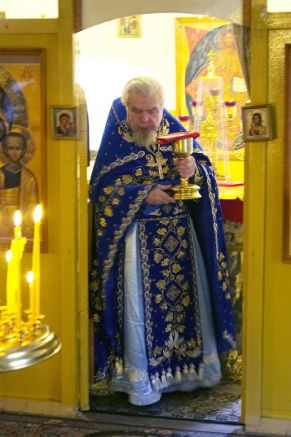

 WE BELIEVE THAT THE SCRIPTURES constitute a coherent whole. They are at once divinely inspired and humanly expressed. They bear authoritative witness to God's revelation of Himself - in creation, in the Incarnation of the Word, and the whole history of salvation. And as such they express the word of God in human language. We know, receive, and interpret Scripture through the Church and in the Church. Our approach to the Bible is one of obedience.


